
Why we changed
The old agency model has changed.
AI has put brand-making in your team’s hands. What you need from an agency is different now, so we changed how Strut works.

The short version
Why we changed, in a nutshell.
-
AI put brand-making in your team’s hands.
Your team can write, design and edit in minutes. But the tools have never seen your brand guidelines, so the more they make, the further the brand drifts. We aren’t burying our heads in the sand: we’ve welcomed the change and built a better way of working.
-
The old model no longer fits.
The old agency model sold time: every change a request, every request a wait, every wait a bill. When your team can make things themselves, paying to wait makes no sense.
-
Making it is easy. Making it right takes people.
Left to run alone, AI gives you slop: one low-value prompt, the first result accepted. It works best with a person at the head and agents doing the legwork, the centaur, not the reverse. Strut is people-first, and always will be.
-
A whole new model.
We give you control of your brand, add guard rails and stay to make sure it works. You make the everyday work. We build what you can’t. We keep it on brand.
-
From first conversation to a brand that runs.
Four steps: check, decide, build and shape. The check is free, you know the price before we start, and every quarter we review what worked.
-
What it means for you.
Your team moves quickly without waiting for us, everything starts from your brand system, and you own the system. If you leave, you take all of it with you.
1 · The situation
What changed

Your team can now write, design and edit in minutes, with tools anyone can use. Work that once went to an agency and came back a week later can be drafted before lunch.
That is good news. But those tools have never seen your brand guidelines. The more your team makes, the further the brand drifts.
Burying our heads in the sand isn’t in our DNA. We know the industry is shifting, and instead of ignoring it, we’re leaning all the way in. We’ve explored exactly what AI can do, welcomed the change, and built a more effective way of working.
2 · The problem
Why the old model no longer fits
The old agency model sold time. Every change was a request, every request was a wait, and every wait was a bill. It made the agency the bottleneck. It kept your brand in files only the agency could use. And when the project ended, nobody measured whether it had worked.
When your team can make things themselves, paying to wait makes no sense.
“So if I can do it all myself, why do I even need an agency?”
The tools make it look easy, and for a lot of everyday work it is. Your team should keep making things.
But making something is the easy part. Knowing it is right, safe and on brand before it goes out is the hard part. Here is what we see people run into when nobody is checking.
-
No strategy
Without an overarching strategy, every decision stands alone. A strategy gives each one something to adhere to, so the work adds up instead of drifting.
-
AI slop
Copy and images that sound and look like everyone else’s. Made-up facts, stock phrases, odd details. People spot it in seconds, and it costs you their trust.
-
Security holes
Sites and apps built with AI often go live with exposed keys, open forms and out-of-date plugins. Nobody notices until someone else does.
-
Code bloat
Generated code works on the day, but it is heavy, slow and hard to change. Pages load slowly, search engines notice, and every fix takes longer than the last.
-
Accessibility gaps
Text too faint to read, images with no descriptions, forms a keyboard can’t use. It shuts people out, and it is easy to miss if you don’t test for it.
-
Rights and privacy
Images, fonts and music you don’t have the rights to use. Customer details pasted into tools that keep them. Small shortcuts with big consequences.
-
Hard to find
Pages without the structure that search engines and AI assistants read, so the people looking for you find someone else first.
3 · The insight
Not all content is equal.
Whether a person or AI made it matters less than how much care went in. Low effort shows either way.
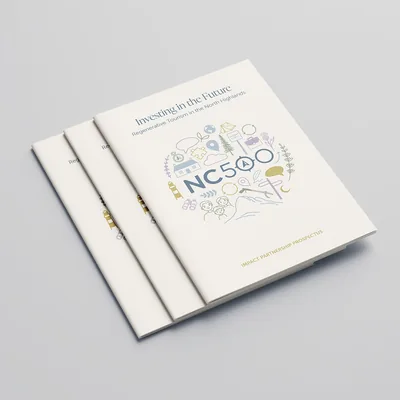
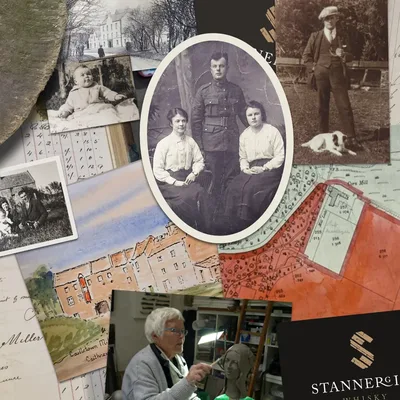
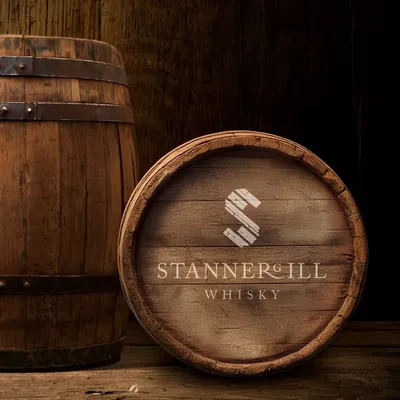
High effort
AI
-
AI, high effort
Directed AI
A series of high-value prompts, refined until the output matches or beats the original vision.
-
Human, high effort
Handcrafted
High quality. A lot of consideration. It carries the brand’s essence and serves its purpose.
-
AI, low effort
AI slopSlop
A single low-value prompt and the first result accepted. It often looks formulaic, artificial and disconnected, though it does a job.
-
Human, low effort
Rushed
Rushed, lazy or poorly made, and it doesn’t always serve its purpose. It often looks under-designed and messy.








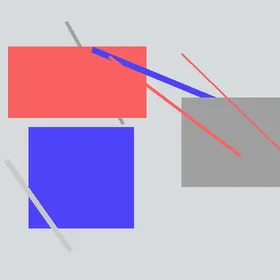
Human
Low effort
So what is AI slop?
AI slop is what you get when AI is left to run on its own. One low-value prompt, and the first result accepted. Nobody checks it, shapes it or asks whether it is any good.
It does a job, which is why it slips through. But it often looks formulaic and artificial, and disconnected from the brand it is meant to serve. People spot it in seconds.
Think you can tell the difference? Let’s find out.
Let’s play…
Slop or Not
Ten pieces of work. Some made with care, some pure AI slop. You get one call on each. Can you spot them all, or will the slop slip past you?
The centaur and the reverse centaur.
AI can help you make good work faster, or make a lot of bad work very quickly. It depends who is in charge.


The centaur
A person at the head, AI doing the legwork.
- The person sets the direction. They set the vision, make the critical decisions, challenge what the AI produces and keep shaping the work towards the goal.
- The AI does the legwork. It speeds up complex work, handles the heavy computation, checks the logic and applies proven best practice at scale.
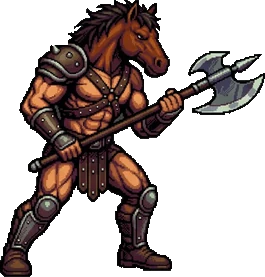

The reverse centaur
AI at the head, a person doing the legwork.
- The AI runs unchecked. With no strategy or guidance, it produces high volumes of unrefined output, slop, that takes a lot of editing and checking.
- The person just watches. They stop making decisions, accept what the AI gives them without question and give up their creative and strategic vision.
The term “reverse centaur” was coined by the writer Cory Doctorow, who uses it for a person made to serve a machine. Our take on it is our own, but the idea is his: read The Reverse-Centaur’s Guide to Criticizing AI.

We work as centaurs.
Agents do the legwork. People make the calls.
Strut is a people-first company, and always will be. AI helps our team move faster, but it takes people to steer it, check it and make it human.
People do
- Workshops
- Strategy
- Vision
- Positioning
- Design thinking
- Ideation
- Taste
- Relationship building
- Sign-off on everything that ships
Agents do
- Collecting research
- Computation
- First drafts
- Code and tests
- Monitoring
- Reports
4 · The answer
A whole new model
We give you control of your brand, add guard rails to keep it on track, and stay to make sure it works.
-
01
You make the everyday work.
Your team creates everyday content and social posts, when it needs them, from the design system file in the AI tools it already uses. No briefs, no waiting.
-
02
We build what you can't.
The strategy, the identity, the voice and the design system file at the heart of it. Then the complex design and creation, the campaigns and the film, made from that same file.
-
03
We keep it on brand.
A small monthly subscription for continuous checking, with quarterly reviews. Voice rules, brand instructions for your AI tools, and checks on what gets made. Guard rails, not gatekeeping.
Good content needs a design system that works.
None of this means you should stop making things. It means you need a system to make them from, and someone who knows what to look for. We give you both.
# Your design system

## Colour
Primary, secondary, and when to use each

## Type
Headings, body copy and sizes

## Voice
Plain words. Short sentences. Sound like us.

## Always / never
The rules your AI follows every time
-
A brand identity
We set your direction with you, then design an identity built for how your team works now.
-
Your design system, inside your AI
Your brand as a design system file that sits inside the AI tools you choose: colours, type, voice, layouts and the rules that hold them together.
-
Tuned until you can do it without us
We test it with your team, then tweak and improve it until they can make their own assets, on brand, without waiting for us.
-
Check-ins and quarterly reviews
Regular check-ins on what is being made, and every quarter a review of what is working against your roadmap.
-
We build what you can’t
Websites, campaigns, film and anything bigger, built with the exact design system we made together. Yes, that one.
-
Consistent
Everything starts from the same system.
-
Easy
Your team works in tools it already knows.
-
Flexible
Make what you need, when you need it.
-
Safe
Checked work, not slop or shortcuts.
-
Cost-effective
Fixed prices and a monthly subscription. No paying to wait.
-
On brand
Above all.
5 · How it works
From first conversation to a brand that runs.
-
Step 1: Check
A free look at how your brand shows up today.
-
Step 2: Decide
Brand strategy: a position and a roadmap, in two to three weeks.
-
Step 3: Build
Brand identity, then your website, app and design work, priced up front.
-
Step 4: Shape
Ongoing support every month, with a review every quarter.
New market, product or channel: from step 4 back to steps 2 and 3
6 · The impact
What this means for you
- Your team makes everyday content quickly, without waiting for us.
- Everything they make starts from your brand system, so it looks and sounds like you.
- We spend our time on the work that needs us: strategy, identity, campaigns and film.
- We check what gets made, and every quarter we show you what worked against the roadmap.
- You know the price before we start. We do not charge by the day.
- You own the system. If you leave, you take all of it with you.
“Since working with Strut we have made leaps and bounds with our brand. Chris, Ed and Andrew spent the time to really get to know our business and our people, which is always reflected in their work. They are knowledgeable and passionate about what they do and are a valuable extension of our inhouse team.”
Free brand check
Where does your brand stand?
Answer fifteen quick questions and we’ll show you which of the five stages of brand building you’ve reached, and how strong each stage is.
- Free
- 15 questions
- About three minutes