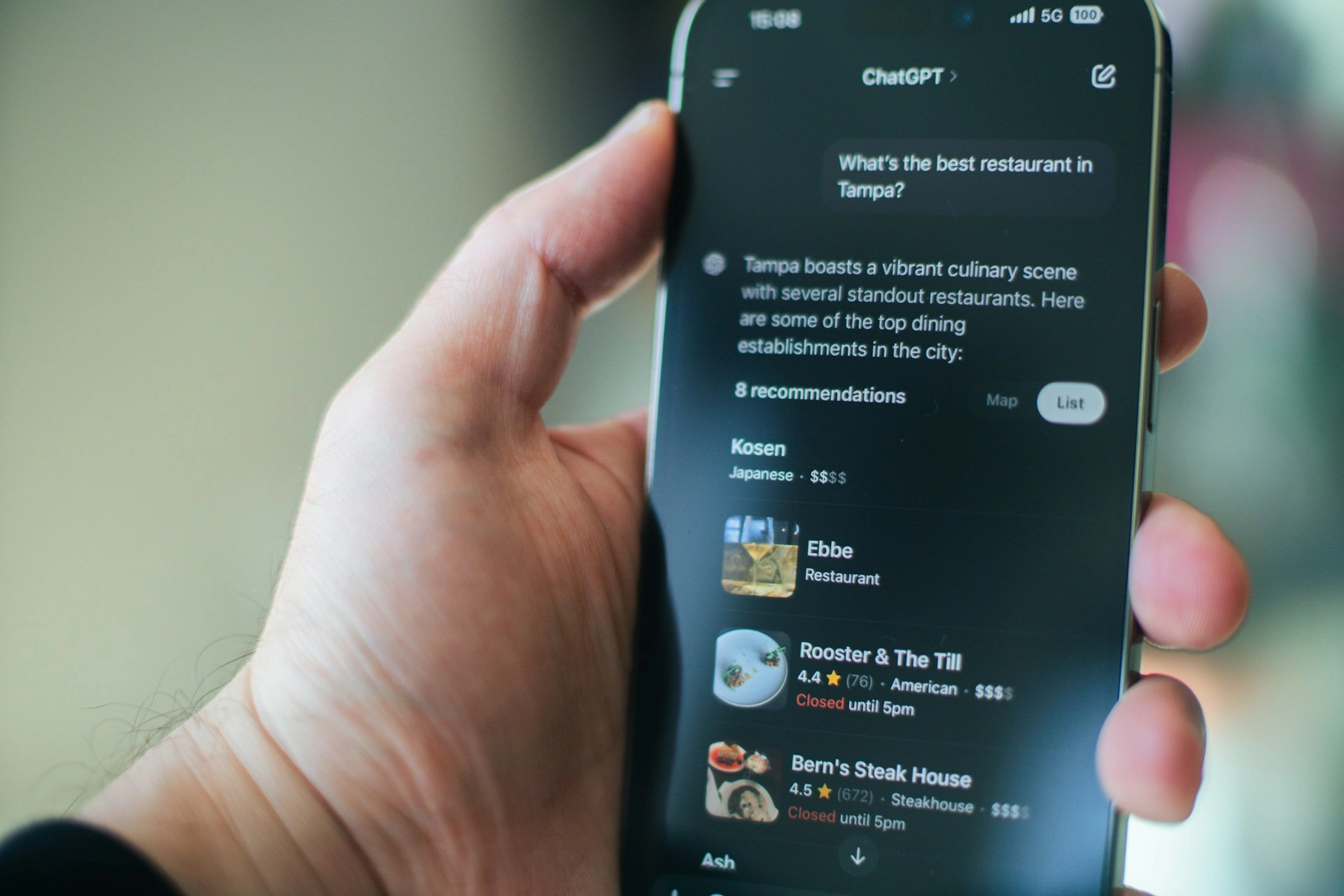
It’s never been easier to generate a website. But generating an interface is a long way from orchestrating a robust digital product. There are perhaps edge cases where an AI prompt can flawlessly do both without human intervention, but I’m yet to see them.
Let’s start by addressing the elephant in the room right away: whenever an agency talks about the limitations of Artificial Intelligence, it can sound like a defensive scramble to justify our own existence.
I promise you, this isn’t one of those panic-button posts. In fact, we love what AI is doing to the design and development space. Tools like Claude, Replit, Base 44, and Lovable are absolutely amazing. The barrier to entry for building digital products has never been lower, and it is undeniably disrupting parts of our industry. But with disruption comes immense opportunity.
We don’t just tolerate AI, we are actively embedding it into our daily operations. We use it extensively, far beyond just tweaking copy. We have Copilot driving efficiencies, we integrate Figma AI into our workflows, and we are constantly experimenting with bleeding-edge tools like Claude Design, OpenClaw and agentic AI frameworks.
There is no such thing as bad AI, just bad owners!
But as professionals who use these tools deeply and have been in the trenches for years, we want to offer some balanced truths. We hear the endless chatter about AI completely taking over the build process, but the reality we see on the ground is different. Here is the honest truth about the AI web design boom, and why we believe the future still requires a human in the driver’s seat. Even if AI is up to the job, it’s only as good as its prompt. There is no such thing as bad AI, just bad owners!
The Ultimate Prototyping Tool
It is brilliant what an individual can achieve today with a few well-crafted prompts. You can generate a beautiful interface, spin up a website, and have it live in a fraction of the time it used to take. There is most certainly a place for that with small brochure website design. That doesn’t affect our business, however. If a client came to us in the past asking for a one-page or small website, we would have recommended a freelancer who can do it at a lower cost and still make a profit. It was a win-win. The chances are, those freelancers have a decision to make around the tools they use and all agencies will follow as technology develops.
But at the moment at least, when it comes to larger builds where security, accessibility, page speed, and other human-experience factors need to be considered, we are noticing a trend of people building digital “Houses of Cards.”
AI is, without a doubt, the greatest tool ever created for Proof of Concept and prototyping. It allows you to visualise ideas instantly. However, a prototype is not a production-ready build. Quite often, these AI-generated sites exist purely on a veneer level.
In agency life, 80% of our work is planning, strategy, and problem-solving. Only 20% is the actual execution. When you ask an AI to build a site, it bypasses that 80%. It gives you the execution without the underlying consideration for the hidden architecture.
Learn the Rules Before You Break Them
If there is one takeaway from this post, let it be this: You need to learn the rules before you break them.
AI will do exactly what you tell it to do. It has an inherent bias to please you. But if you don’t possess the foundational knowledge, your output will be fundamentally flawed. You cannot effectively prompt an AI to build a secure, robust application if you don’t know the rules of:
- Security: How is data being transferred? Where is it stored? Are there vulnerabilities or exploits in the generated code?
- Accessibility: Does the site comply with WCAG standards so that all users can navigate it? Remember this is legal requirement when building publicly funded websites.
- Privacy: Who owns the data, and does the architecture respect modern privacy laws?
It’s not just a “What You See Is What You Get” scenario. There are vital soft skills and hard technical realities that go into a build. You need human input to bridge that gap, even if that input is simply auditing the design, reviewing the build, and checking the code. In short, you don’t know what you don’t know, and without including that in your prompt, you may fall foul of unseen issues.
The “Fix-It” Problem
A year or two ago, we noticed more of our clients using Canva. Rather than swim against the tide, we started building robust, professional brand systems and templates for our clients that can be used inside Canva.
The same shift is happening with AI. People are coming to us for the elements they just can’t replicate with an AI prompt.
Building a website with AI right now is a bit like buying a bunch of car parts and throwing them together. It might look like a car, and it might even drive down the street. But when it inevitably breaks, people bring it to us and ask, “Can you fix this?”
Because the AI-generated code is frequently bloated, over-engineered, or built without a cohesive strategic purpose, the back-end is often a mess. We are seeing a lot of chatter about agentic AI—autonomous agents that can build and fix complex systems on their own. We experiment with them constantly, but we haven’t yet seen an agentic system that actually does what it needs to do reliably in a complex production environment. It takes human expertise to untangle the code and apply the ‘experience based’ thinking that is needed.
The Human Composer
AI will get better. We know that, and we welcome it. But as the sheer execution of design and code becomes fully commoditised, the real value shifts back to high-level expertise, review, and holistic understanding.
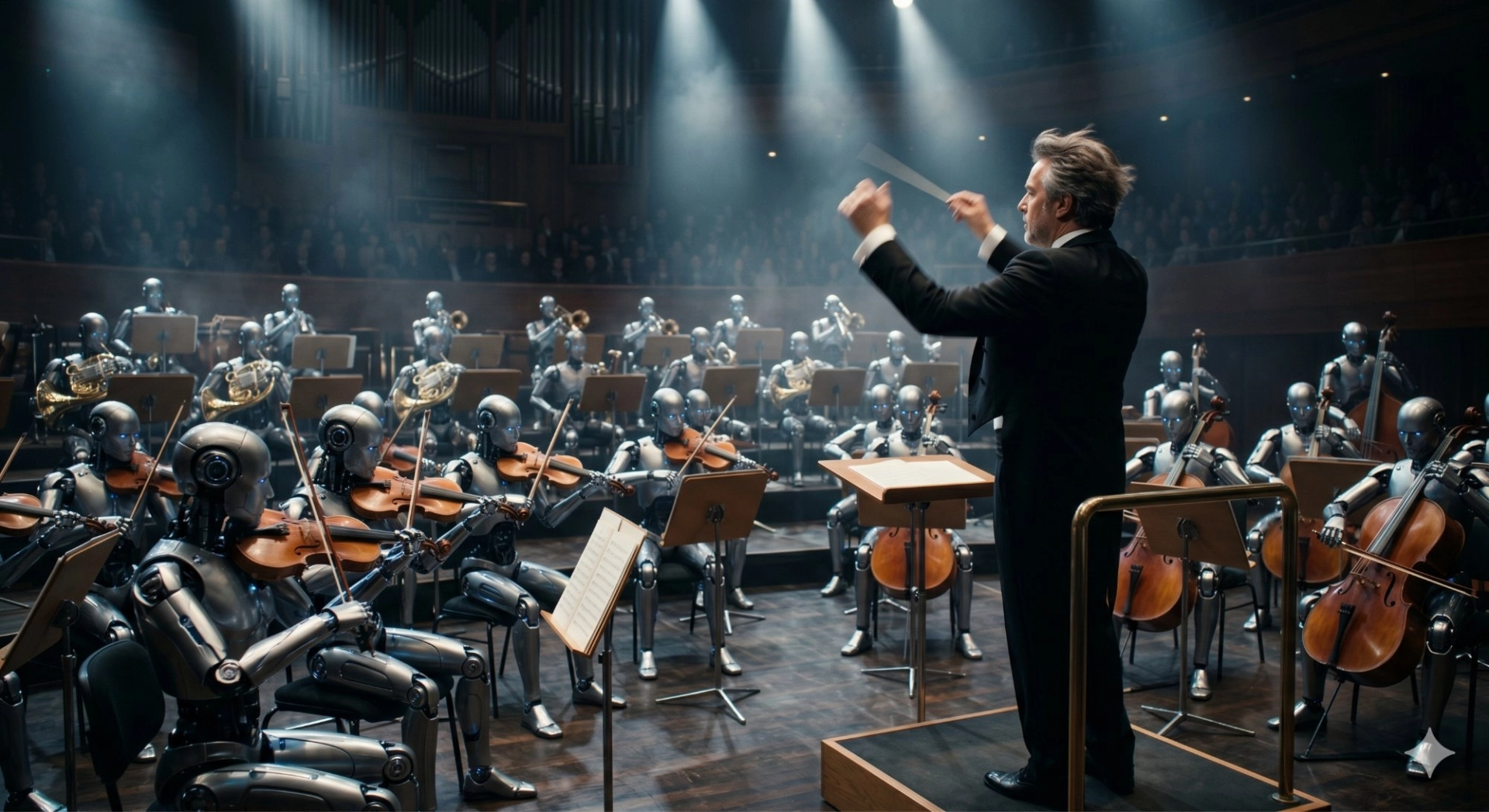
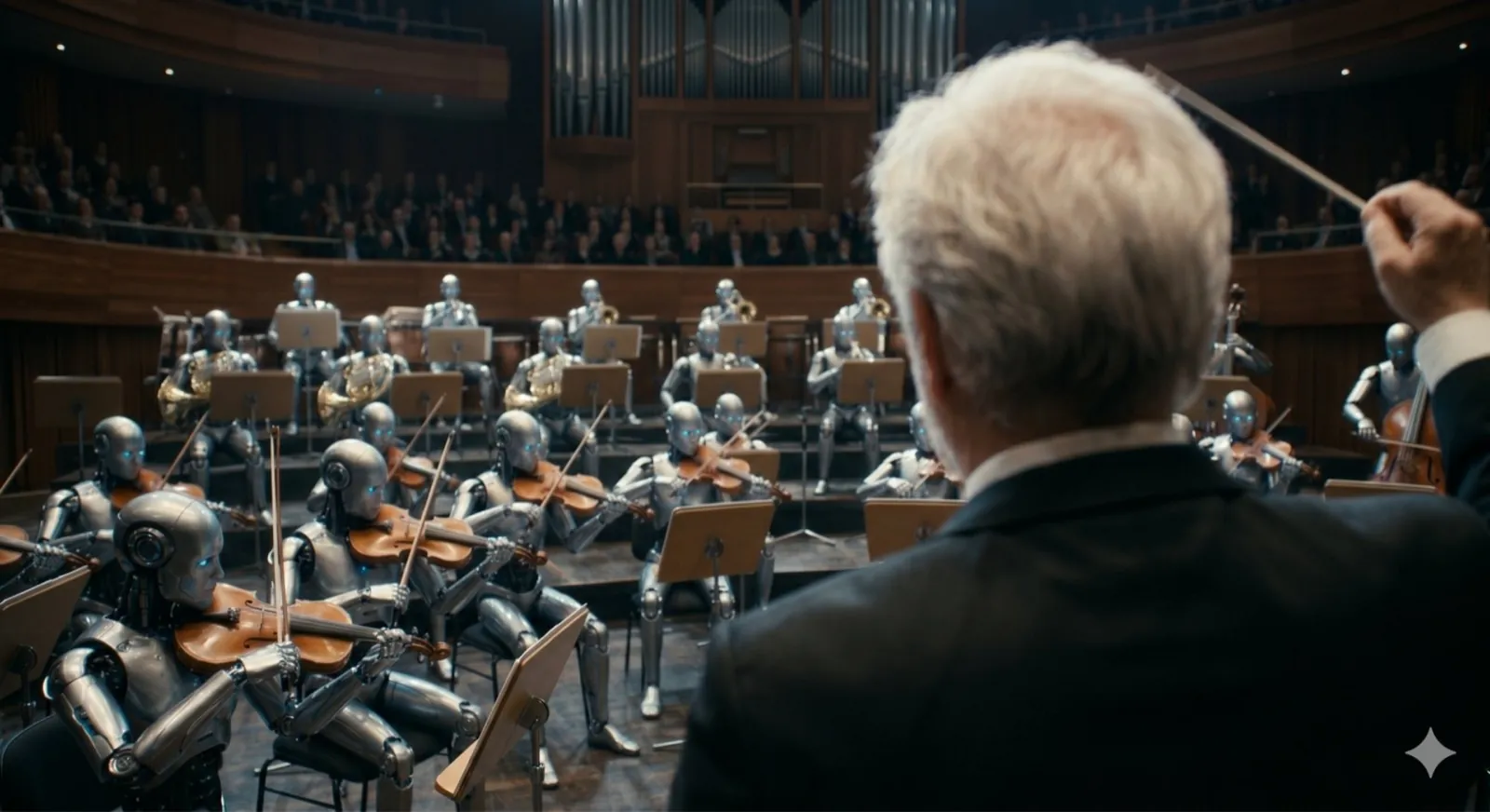
Think of AI as a team of world-class instrumentalists. You can swap out a humans for AI agents, and it will play the notes flawlessly. But you still need an experienced and skilled Composer to orchestrate the symphony.
AI cannot sit in a breakout room, read the room, and truly understand the holistic problems your brand is facing. It can only recycle and regurgitate what other humans have already told it.
To create something truly resonant, structurally sound, and technically legitimate, you need a human in the driving seat. You can absolutely use AI to generate the bulk of the code, but you will always need a human to review it, validate it, and ensure it follows the rules before it goes live.
AI is a brilliant tool. It is an unmatched prototyping engine. But your business still needs a composer.
Bonus
Just to prove that an image is only as good as the prompt you give it, here is the prompt I used when asking google to create me the conductor and orchestra images:
“Create me an image with a photorealistic, cinematic still from a high-end musical documentary. A passionate human classical composer in a sharp, tailored tuxedo is dramatically conducting a full symphony orchestra composed entirely of intricate, sleek humanoid robots. The futuristic metallic robots are elegantly playing traditional wooden orchestral instruments like violins, cellos, and French horns. Shot from a dynamic, low-angle perspective just behind the composer’s shoulder, capturing the sweeping motion blur of the conductor’s baton. Dramatic, high-end theatrical stage lighting: intense overhead spotlights cut through a light atmospheric haze, casting cinematic chiaroscuro shadows and creating striking rim lighting on the robots’ metallic chassis. Shot on ARRI Alexa 65, 35mm lens, shallow depth of field, 8k resolution, masterpiece, highly detailed, emotional and majestic.”